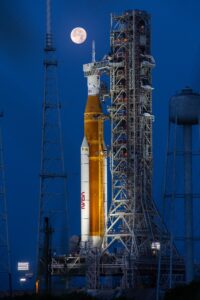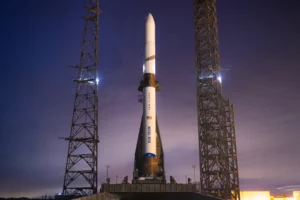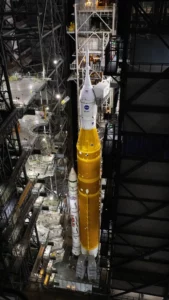
Much is made of SpaceX and Blue Origin, but there are many other private companies creating their own rockets. Some of them using what are in fact innovations in the field. This article is one of a series about them.
Rocket Lab is a private company that has been developing sub-orbital, small orbital and now medium orbital rockets. It was founded in 2006 in New Zealand on the initiative of New Zealand engineer Peter Beck, through investors mainly from New Zealand, including one who made his private island (Great Mercury Island) available for the first launches.
Rocket Lab moved its headquarters to Southern California in 2013. It initially settled in Huntington Beach, then moved to Long Beach, which helped it win more contracts from NASA and the US Department of Defense, as well as American investors. But its launches continued to be made from New Zealand, at Launch Complex 1, owned by Rocket Lab, on the Mahia peninsula.
Rocket Lab’s first experiments were with a small suborbital rocket, the Ātea (which means space in New Zealand’s native language), in 2009. The company quickly used the experience gained with it to develop its first orbital rocket, the Electron. To date, Rocket Lab has carried out 21 Electron launches, with 18 being successful.
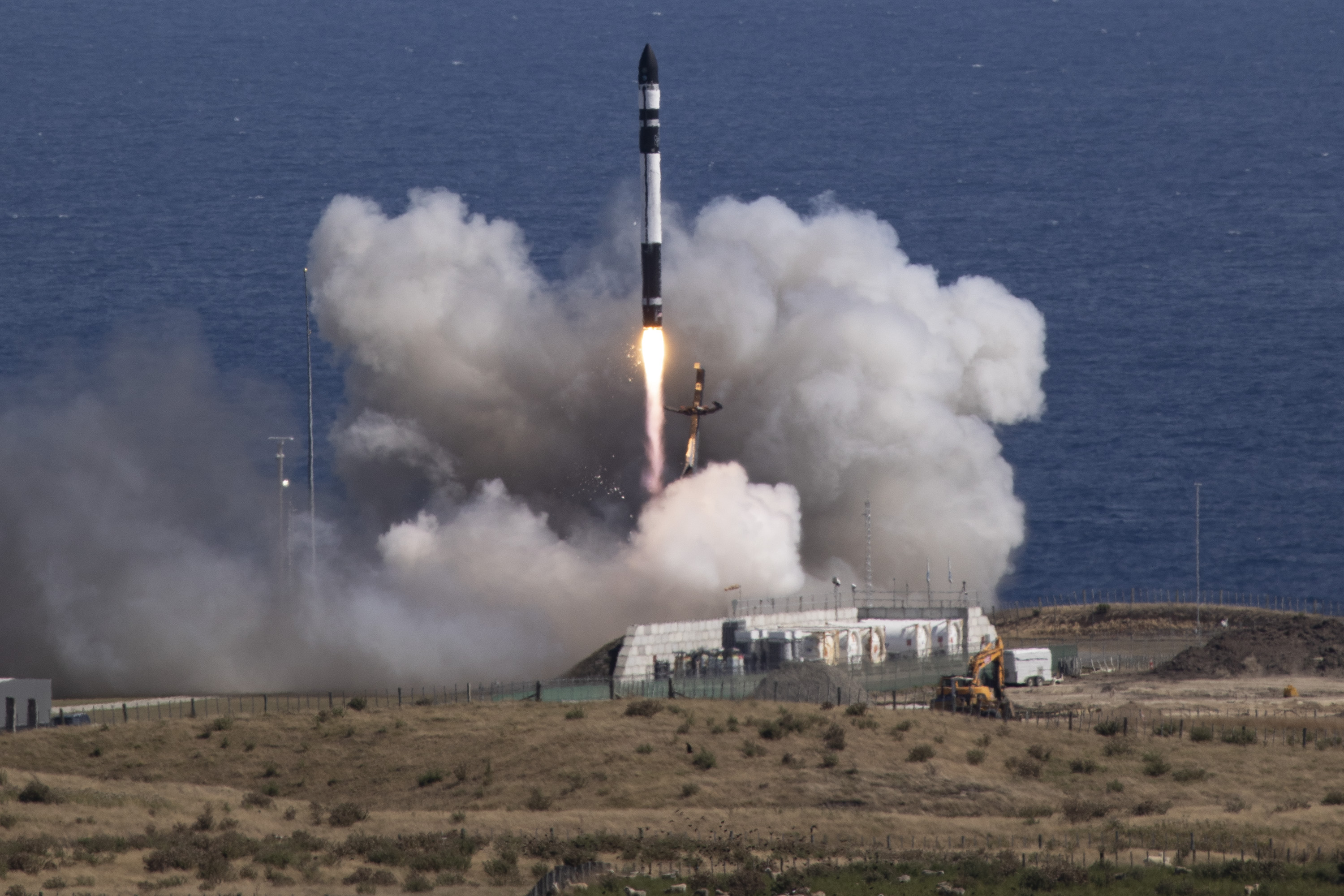
Electron is a 2- or 3-stage rocket. Both main stages are powered by Rutherford liquid fuel engines (RP-1, a refined form of Jet-A, which in turn is a refined form of kerosene). The optional 3rd stage uses the small Curie monopropellant engine (Ammonium Perchlorate – Aluminum, AP Al). At 18 m high, 12.5 t in mass, it is capable of carrying payloads of up to 300 kg into low orbit, or 200 kg into sun synchronous orbit, at a per launch price of just $7.5M.
Although it is common for orbital rockets to run on 2 stages of RP-1 liquid fuel, Electron has major innovations in the engine and the construction of the vehicle:
- Composite material structure: the bulk of the volume and dry weight of a rocket is the fuel and oxidizer tanks. Traditionally, these and other structural elements are made of metals such as steel, aluminum and titanium. Electron has these elements made of carbon composite materials, where fibers are embedded in epoxy, and everything is cured in ovens. The resulting materials are lighter than metals, that could withstand the same forces. This is why high-performance cars have swapped aluminum for composites since the 1980s (in the case of Formula 1), various other sports have adopted carbon fiber in vehicles and equipment, and the aeronautical industry is slowly adopting composites in larger and larger parts of newer aircraft, such as the Boeing 747-8 and 787 and the Airbus A-380 and A-350. A major difficulty that Rocket Lab had to overcome was finding out how to make the structure/tanks (the tanks are structural) withstand, at the same time, the cryogenic internal temperatures (around -180°C) and high external temperatures (up to 300°C) on the outside, due to the drag and adiabatic compression of the air, and withstand contact with liquid oxygen without reacting with it. Rocket Lab is also innovating in the construction process: traditionally, composite structures were made with a lot of manual labor, which, in the case of Electron, took 400 hours to produce all the components. With the use of the Rosie robot (yes, named after The Jetsons), Rocket Labs has reduced manufacturing to 12 hours. This also greatly reduced the cost.
- Engines with electric pumps: Electron is the first rocket not to use turbines for the pumps (turbopumps). All liquid fuel rockets need to pump huge volumes of fuel and oxidizer very quickly, to be burned in the engines. Because they have to deal with high volume, high pressures and potentially low and high temperatures (fuel or oxidizer can be stored cryogenically and is heated before reaching the combustion chamber), engine turbines and pumps have traditionally been the most difficult parts to design and build. The Rutherford engine (a tribute to New Zealand physicist Ernest Rutherford, one of the pioneers of nuclear physics) uses electric pumps, powered by lithium polymer batteries (like computers, phones and electric cars), which made the design much simpler, more robust and cheaper. The second stage even has an ejection mechanism for the used batteries, to reduce weight. The use of electric motors is a case in which Rocket Lab has achieved an innovation that almost everyone in the field said would not be possible or the result would be worse (something that is not as common as many people think). Traditionally, it was thought that the energy density of the batteries, much lower than that of the propellants, would make the system too heavy. But Rocket Lab noticed that the energy efficiency of rocket turbines is traditionally only around 50%, because the mixture needs to be far from stoichiometric, so that the heat doesn’t destroy the pump, and also adopted the strategy of ejecting the used batteries, so that their weight, effectively like the weight of fuel, decreases over the course of the flight. They developed their own electric motors and high-power controllers, obtaining motors with a power equivalent to 110 hp (similar to a small car), the size of a soda can. The electric motors also brought efficiency gains by being able to run until the fuel tanks are empty and by being able to precisely control the power (which is not possible with turbines).
- Engines partially manufactured with 3D printing: Traditionally, engines are made up of thousands of parts, each machined and prepared individually, and then assembled. This is a process that takes a lot of time while maintaining quality control in the manufacture and assembly of the parts – and therefore costs a lot. For example, each of the joints through which fuel or oxidizer passes has to withstand high pressure and varying temperatures without leaking. The Rutherford engines are partly made using 3D printing, which allows the complex shapes required to be generated precisely and in a few parts, requiring much less assembly and testing at the end. Using the same motor for the first stage (8 of them) and the second (1 motor) also helps Rocket Lab to save money and produce faster.
- It’s not part of the rocket, but it is part of Rocket Lab’s recipe for being able to launch frequently: they has built their own launch base, in what is essentially an isolated place in the middle of the ocean. This is important for achieving the goal of launching up to every 3 days: traditional launch centers in the US need much more lead time to schedule a launch, because they are very busy and don’t have such free scheduling, as they need to disrupt a lot of air and sea traffic over a large area. As an example, a recent Falcon Heavy launch from Florida resulted in more than 500 airline flights being canceled or postponed due to airspace closures. This was the reason Rocket Lab chose its launch site in New Zealand.
According to Peter Beck, Rocket Lab’s clear priority is to make it possible to build infrastructure in space, offering customers a reliable vehicle that can be launched very frequently (up to one every 3 days, under the current license), and all the design decisions were aimed at achieving these two objectives. The new technologies were not used just because they were new, to be different, but because they were possible and necessary. For a customer with a small satellite (the market that has grown the most in recent years), Rocket Lab’s price per kg to orbit would not necessarily be lower than the traditional option (rideshare in a large rocket, such as a Falcon), but by using Electron the customer can freely choose the launch date and orbit, which is not possible in a rideshare, and saves on the satellite, which doesn’t need as much fuel to adjust its orbit after launch. In addition, due to the use of electric pumps, the Electron would be the rocket with the smoothest ascent, which makes it possible to design less robust satellites (as they don’t have to withstand as much effort during launch).
Finally, what isn’t exactly revolutionary, but is one of the important decisions made by the company: to minimize the amount of space junk they leave in orbit. After the second and third stages deliver their cargo, they put themselves into an elliptical orbit that intercepts the atmosphere, to re-enter and fall into a previously chosen spot in the ocean.
Although it’s not the priority (the most important thing for Electron is reliability and fast production), Rocket Lab is experimenting with the possibility of reusing the first stage. It has a new protection system for re-entry into the atmosphere and the descent is made by parachute, so as not to have to carry all the mass of fuel and oxidizer that would be needed to use the engines. In the initial attempts, the rocket lands by parachute in the ocean, but there are plans for it to be “fished out” in flight by helicopter, before landing in the sea, to make it easier to reuse (the rocket doesn’t fill up with water). And part of Rocket Lab’s recipe for greater efficiency and lower costs is one that other new companies, such as SpaceX, also use: building the entire rocket in its own factory, without outsourcing components to other companies. A larger initial investment is required, to obtain all the equipment and hire all the personnel needed for all the areas (propulsion, electronic engineering, electrical engineering, mechanical engineering, materials engineering, software, etc.), but this avoids the intrinsic inefficiencies of outsourcing work, such as spending money on the profit of each contracted company and spending time and money preparing specifications, contracts and communicating with the other companies.
In 2021, Rocket Lab announced the construction of Launch Complex 2 at the Mid-Atlantic Spaceport, part of the NASA Wallops Flight Facility (near the border between Maryland and Virginia), operated by NASA’s Goddard Space Flight Center. Rocket Lab needed a launch site in the US, to serve customers who can’t or don’t want to take their satellites to another country, and Wallops was a good choice partly because it is much less busy than more popular centers such as Cape Canaveral and Vandenberg. Rocket Lab has also announced that it will become a public limited company, launching shares on the market to raise more money, which will be used mainly to finance its next rocket, the Neutron, which will be much larger than the Electron, capable of carrying up to 8 t into low orbit and certified to carry humans. It will be reusable, landing on a platform at sea and will be launched from the Mid-Atlantic Regional Spaceport. It has not yet been decided where it will be manufactured and is not expected to be ready until 2024.
Another characteristic of the company, as can be seen from the number of videos posted here, is that it is very open, working on communicating and showing what it is doing, in a concrete and friendly way, without being obsessed with fancy advertising. The managing director, Peter Beck, who is also the technical director, is very keen to explain what they do to the public.
See more at
Rocket Lab’s official website: https://www.rocketlabusa.com/
CEO Peter Beck briefly explains the nascent industry of small, inexpensive rockets
Factory tour:
A long interview with the CEO, Peter Beck, discussing many more details of the company’s history and how the rocket works.
This post is also available in:
 Português