This week brought some dramatic shifts for the Artemis architecture. NASA Administrator Jared Isaacman has announced a sweeping overhaul of the Artemis program, designed to increase launch cadence, by standardizing hardware, and taking a more phased “Apollo-style” approach to returning humans to the Moon.
Here is a breakdown of what the Artemis program has achieved so far, where our upcoming flights stand, and the massive changes just announced for the rest of the decade.
The Journey So Far
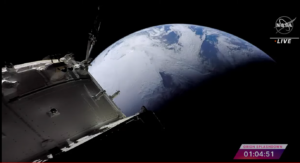
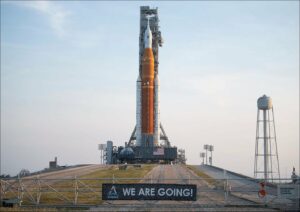
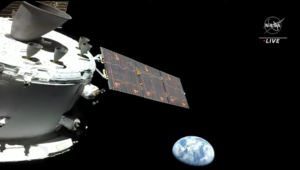
The Artemis program first flew in late 2022 with the spectacularly successful Artemis I mission. After years of anticipation, the inaugural launch of the Space Launch System (SLS) sent an uncrewed Orion capsule on a 25-day journey around the Moon and back, proving that the world’s most powerful operational rocket and next-generation crew capsule were ready for prime time. Since then, the spaceflight community has been eagerly watching the preparations for our first crewed return to the lunar vicinity.
Artemis II: Back on Track for April
Before looking at the new changes, let’s look at the very near future. The crewed Artemis II mission, which will take four astronauts on a free-return trajectory around the Moon, remains the next big milestone.
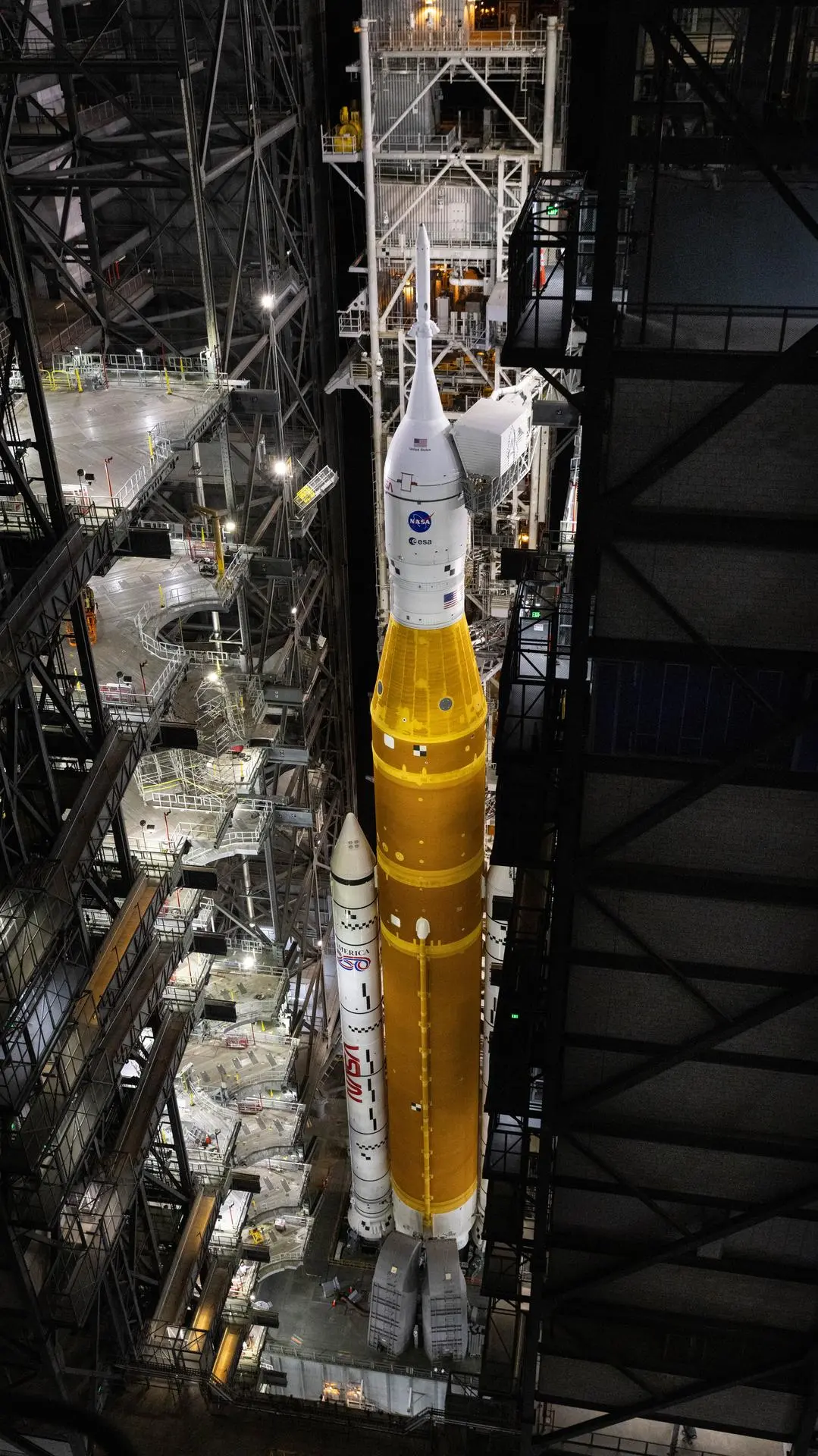
Recently, the SLS rocket and Orion stack were rolled back to the Vehicle Assembly Building (VAB) to address a helium flow and pressurization issue discovered in the rocket’s Interim Cryogenic Propulsion Stage (ICPS). With the hardware safely back in the VAB, ground teams have successfully implemented the fix. End-to-end testing for range safety requirements and battery replacements are wrapping up, putting Artemis II solidly on track for its next launch window, which opens in April 2026.
The Old Plan: Artemis III to V
To understand how monumental this week’s announcement is, we have to look at what was planned.
Under the old architecture, Artemis III was slated to be the historic return to the lunar surface in 2028, landing astronauts near the lunar South Pole. Artemis IV and Artemis V were to follow with subsequent landings to help build out the Lunar Gateway station and establish a permanent human presence.
To achieve this, NASA had planned to introduce the Block 1B upgrade to the SLS rocket starting with Artemis IV. This upgrade relied heavily on the development of the massive new Exploration Upper Stage (EUS). Because the EUS was so much larger and more powerful than the ICPS, NASA also had to commission a brand-new mobile launch platform, the Mobile Launcher 2 (ML-2), to handle the new stack.
The New Plan: A Major Pivot
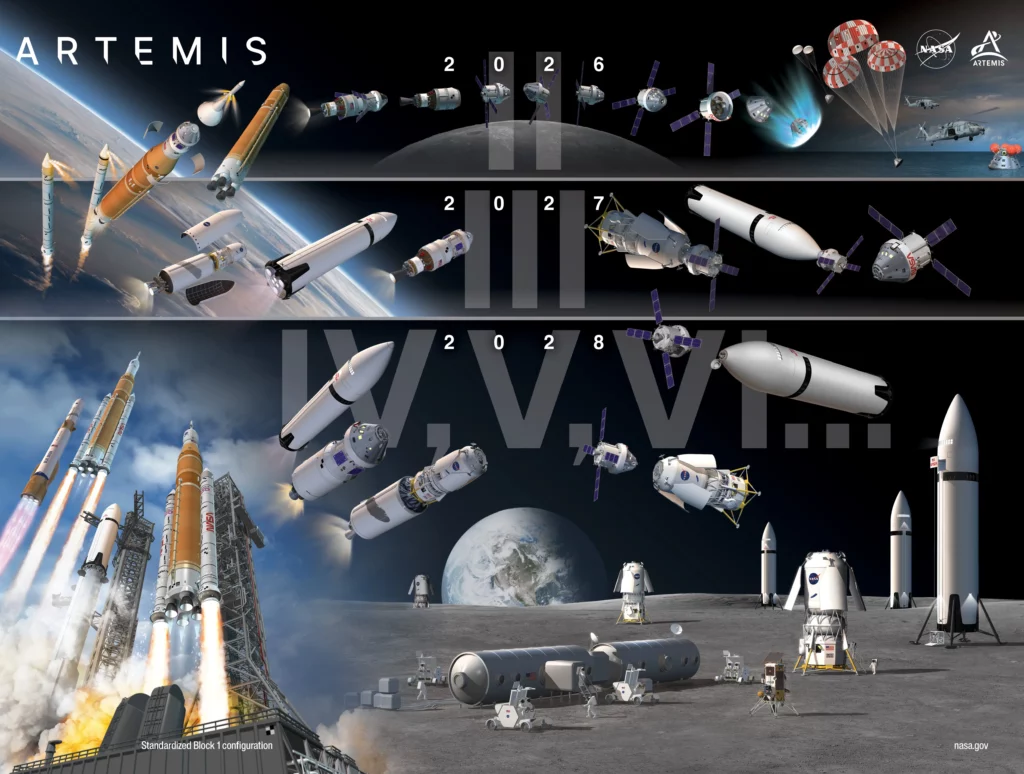
Citing the risk of depending on too many new technologies at once – the yet-unflown HLS vehicles from SpaceX and Blue Origin, orbital cryogenic refueling, the new Axiom suits, and all the upgrades to SLS -, and a need to launch more than once every three years, NASA is radically changing the architecture. Here are the major changes announced this week:
Artemis III is staying in Low Earth Orbit The most prominent change is that Artemis III will no longer land on the Moon. Recognizing that going straight from a lunar flyby (Artemis II) to a lunar landing was a large leap, depending on several unflown contracted vehicles, Artemis III will launch in 2027 as a Low Earth Orbit (LEO) test flight.
In a mission profile highly reminiscent of Apollo 9, the Artemis III crew will rendezvous and dock in Earth orbit with one (or both) of the commercial lunar landers – SpaceX’s Starship HLS and Blue Origin’s Blue Moon. This new Concept of Operations (ConOps) will allow astronauts to conduct critical checkouts of docked operations, life support, propulsion, and the new Extravehicular Activity (xEVA) spacesuits in microgravity before anyone takes them to the Moon.
Accelerating Artemis IV and V With Artemis III serving as a vital stepping stone, the historic lunar surface landing is now officially deferred to Artemis IV in early 2028. Artemis V will follow closely behind, with NASA targeting a blistering 10-month turnaround to land another crew later in 2028. Moving forward, the agency hopes to maintain a cadence of at least one lunar landing per year. Crucially, the landing vehicle to be used for each of Artemis IV and V was not specified. The old plan was to have Starship HLS for Artemis IV, and Blue Moon for Artemis V, but that order now seems to be not determined, probably pending evaluating their readiness and any necessary changes after Artemis III.
Scrapping SLS Upgrades: No more EUS and ML-2 To achieve this rapid launch cadence, NASA is standardizing the SLS rocket and dropping its upgrades. The agency will cancel the development of the Exploration Upper Stage (EUS), effectively killing the SLS Block 1B and Block 2 configurations.
Because the larger SLS configurations are no longer happening, NASA is also dropping Mobile Launcher 2 (ML-2). The agency will instead stick to standardizing the current SLS core stage and the existing mobile launcher, and increase the civil servant workforce, to increase the cadence of SLS launches.
Centaur V Chosen Over New Glenn Second Stage With the EUS cancelled and the current ICPS hardware maxed out with Artemis II, NASA needed a standardized, flight-ready upper stage to carry Artemis IV, V, and beyond. After some consideration given to Blue Origin’s New Glenn rocket, NASA ultimately chose United Launch Alliance’s (ULA) Centaur V.
The Centaur V is already flight-proven (flying on the Vulcan rocket), utilizes the same propellants as the ICPS, and is similarly sized and designed, by the same contractor (ULA), making it a much smoother integration for the SLS. It provides a slight performance boost with its dual engines, offering the necessary capability to push Orion to the Moon without the multi-year development needed for the EUS. This choice was not announced by a press release, but rather just published as a Justification for Other Than Full and Open Competition (JOFOC) award posted to SAM.gov (System for Award Management). Further, the rationale for the contract is that the New Glenn upper stage would require more major changes, in particular extending the work height of the Vehicle Assembly Building, to accommodate the length of the New Glenn second stage atop the enormous SLS core stage, topped by the European Service Module, Orion and the Launch Abort Tower.
Update (March 12): NASA OIG Report Highlights HLS Safety and Testing Risks
Providing context to NASA’s recent architecture pivot, the agency’s Office of Inspector General (OIG) released a highly critical report on March 10 detailing the severe risks still facing the Human Landing System (HLS) programs:
- While noting the fixed-price contracts have kept development costs under control, the OIG flagged major deviations from standard “test like you fly” principles. Specifically, the uncrewed demonstration flights for the landers are not required to test life support systems against lunar dust degradation, nor are they required to demonstrate post-ascent orbital docking.
- The OIG noted that Starship’s 171-foot height and high landing momentum presents a tip-over risk on the steep 20-degree slopes of the lunar South Pole, and its 115-foot external elevator currently lacks a backup ingress method for astronauts if it fails. Blue Moon’s lower stance means a lower tip-over risk, and no need for an elevator.
- The OIG raised alarms over anticipated manual piloting waivers. While NASA mandates manual control capabilities across all flight phases, SpaceX’s highly automated architecture may require a waiver – a prospect the OIG views as highly risky given Starship’s complete lack of lunar flight heritage and the knowledge that many landing attempts at the Moon failed in the last seconds of flight.
- Finally, the OIG warned that NASA currently has no contingency vehicle to rescue astronauts stranded on the Moon.
Update (March 13): From an interview with the administrator
In an interview with Spaceflight Now later in the week, NASA Administrator Jared Isaacman directly addressed these concerns, confirming that the OIG report reflects the old Artemis architecture:
- Evolving the Fixed-Price Model: For HLS, rather than just throwing money at the problem or demanding faster delivery, the agency will be actively embedding its own Subject Matter Experts to assist contractors on the critical path and drive outcomes. What was never addressed is how much extra cost this represents to the agency, and where those funds would come from – every NASA employee and contractor is paid by work-hour on by each project they work on. Thus, with this new task being carried out by the NASA workforce, even if the HLS or Axiom suit gets delivered “on budget” (referring to the contracted fixed price), they would still be overbudget for NASA, by an amount that can easily exceed the budget of entire missions.
- Restoring In-House Capability: To support this and boost launch cadence, Isaacman announced an overhaul of the workforce, transitioning thousands of long-term contractors into civil servant roles. He noted it as “completely illogical that career personnel are kept as contractors due to decades-old artificial hiring ceilings”, and estimates this conversion will free up an additional $1 billion in the budget.
- The “NASA Force” Initiative: Separately, Isaacman outlined a “NASA Force” program—a two-year temporary tour of duty aimed at bringing senior experts from the commercial space sector into NASA to share agile methodologies and mentor younger talent. While announced as an ambitious part of his workforce strategy, some industry experts have expressed skepticism regarding the practicalities of recruiting established private-sector talent into temporary government roles and integrating them smoothly into NASA’s existing institutional culture.
- Addressing the Piloting Waivers: Regarding Starship’s manual piloting capabilities, Isaacman clarified that astronauts primarily want fly-by-wire retargeting (similar to Crew Dragon), which Starship supports. However, for full direct manual control, he is challenging the astronaut corps to identify specific landing faults where manual override is definitively safer than an automated abort.
- Accelerating the Timeline: While he deferred to SpaceX and Blue Origin to share the proprietary details of their acceleration proposals, he laid out an aggressive robotic precursor campaign. To build up infrastructure and scout the environment ahead of the crewed landings, Isaacman promised a cadence of monthly uncrewed CLPS (Commercial Lunar Payload Services) landings at the South Pole starting in early 2027.
- The Budget Reality: Pushing back against the idea that NASA lacks the funding for these ambitions, Isaacman pointed to the agency’s $25 billion annual budget, bolstered by a recent $10 billion “plus-up” from the 2025 reauthorization bill, without going into whether the Artemis funding is predicated by absorbing funds from other programs like Mars Sample Return.
- Teasing the Lunar Base Architecture: While the immediate focus remains on the upcoming Artemis II and III flights, Isaacman teased that NASA will host a major event in Washington, D.C. in the coming weeks to formally outline the long-term lunar base architecture. He hinted at an ambitious, tech-heavy roadmap for the lunar South Pole, including heavy rovers dedicated to “surface improvement” (paving landing zones to mitigate dust risks), 3D printing with lunar regolith, utilizing lunar ice for propellant, and even a potential nuclear thermal propulsion demonstration by 2028.
More info
The NASA press release:
https://www.nasa.gov/news-release/nasa-adds-mission-to-artemis-lunar-program-updates-architecture/
The SAM.gov post
https://sam.gov/workspace/contract/opp/9a93c52c2eba4f5abed0305b3fb4512a/view
NASA’s Management of the Human Landing System Contracts (Report IG-26-004)
Interview with NASA administrator
https://youtu.be/q_Y0qUQUbrk?si=Pk9E-hijKtKGlP_v